No-Rooz, The Iranian New Year at Present Times
No-Rooz, in word, means "New Day". It is the new day that
starts the year, traditionally the exact astronomical beginning of the Spring.
Iranians take that as the beginning of the year. This exact second is called
"Saal Tahvil". No-Rooz with its' uniquely Iranian characteristics has
been celebrated for at least 3,000 years and is deeply rooted in the rituals
and traditions of the Zoroastrian (This was the religion of ancient Persia before
the advent of Islam in 7th century A.D.).
Iranians consider No-Rooz as their biggest celebration of the year, before the
new year, they start cleaning their houses (Khaane Tekaani), and they buy new
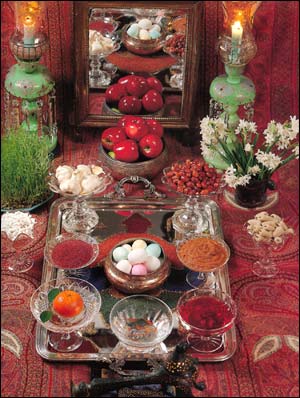
clothes. But a major part of New Year rituals is setting the "Haft
Seen" with seven specific items. In ancient times each of the items
corresponded to one of the seven creations and the seven holy immortals
protecting them. Today they are changed and modified but some have kept their
symbolism. All the seven items start with the letter "S"; this was
not the order in ancient times. These seven things usually are: Seeb (apple),
Sabze (green grass), Serke (vinager), Samanoo (a meal made out of wheat),
Senjed (a special kind of berry), Sekke (coin), and Seer (garlic). Sometimes
instead of Serke they put Somagh (sumak, an Iranian spice).
After the Saal Tahvil, people hug and kiss each other and wish each other a happy new year. Then they give presents to each other (traditionally cash, coins or gold coins), usually older ones to the younger ones. The first few days are spent visiting older members of the family, relatives and friends. Children receive presents and sweets, special meals and "Aajil" (a combination of different nuts with raisins and other sweet stuff) or fruits are consumed. Traditionally on the night before the New Year, most Iranians will have Sabzi Polo Mahi, a special dish of rice cooked with fresh herbs and served with smoked and freshly fried fish. Koukou Sabzi, a mixture of fresh herbs with eggs fried or baked, is also served. The next day rice and noodles (Reshteh Polo) is served. Regional variations exist and very colorful feasts are prepared.
 هدف از تاسیس وبلاگ انجمن علمی گروه زبان دانشگاه آزاد اسلامی واحد یزد، معرفی این انجمن و فعالیت های متنوع آن، اطلاع رسانی و همچنین ارائه خدمات علمی، آموزشی وفرهنگی می باشد. امید است بتوانیم گامی موثر در جهت ارتقاء سطح علمی گروه زبان برداریم.